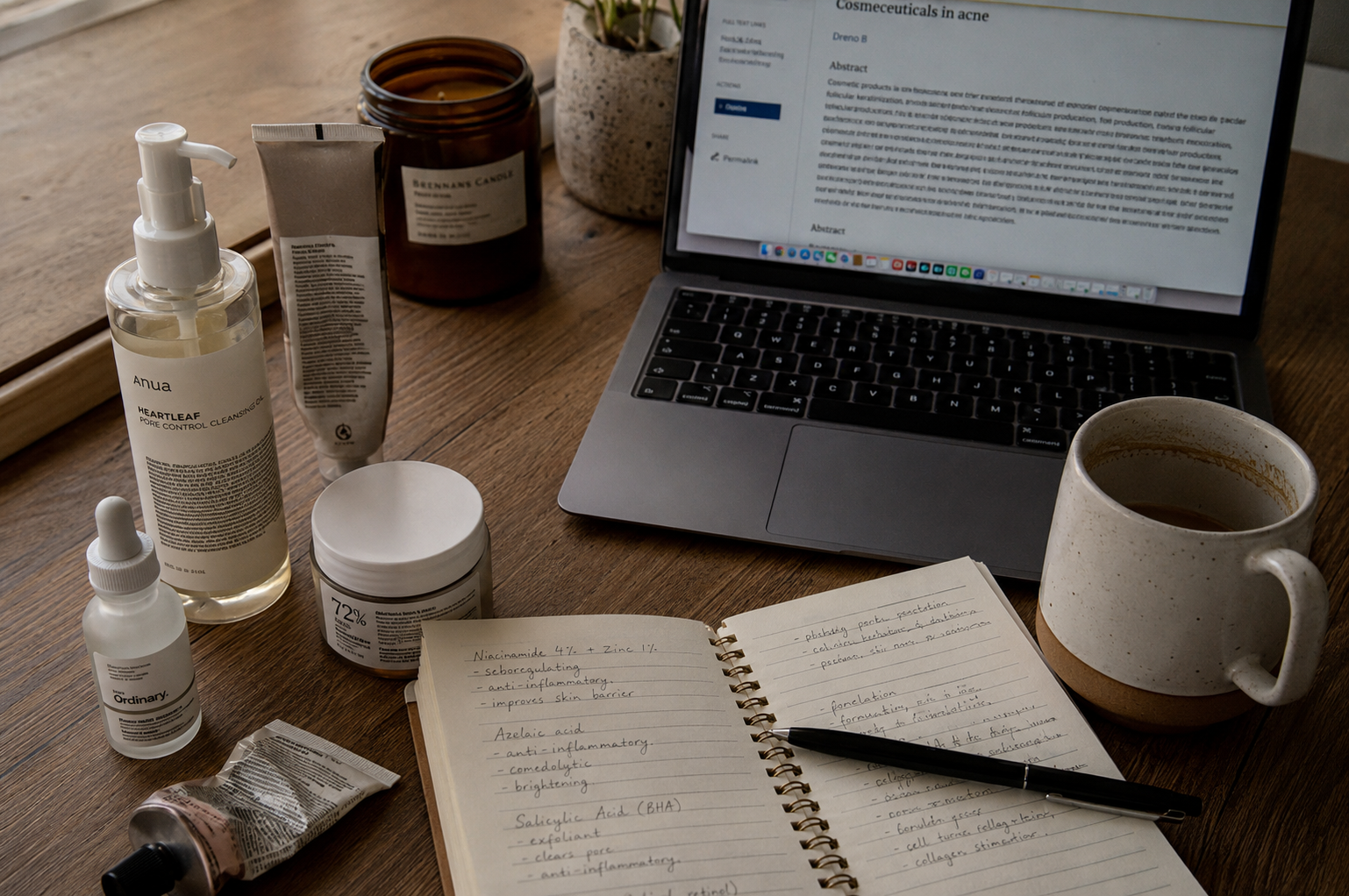
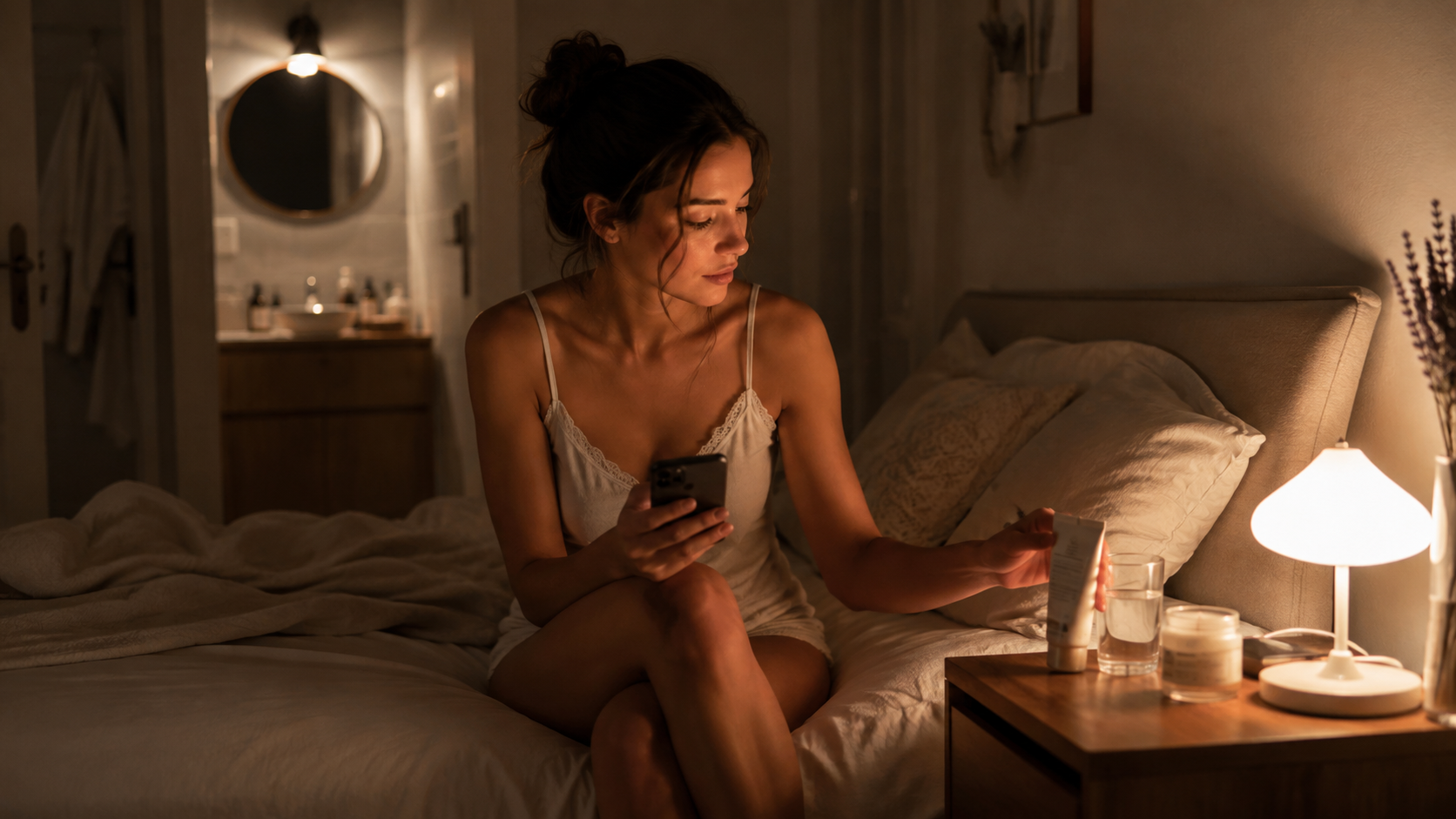
Picture this: it's midnight, you're in a scroll spiral, and suddenly some creator is telling you that your moisturizer is basically a hormone cocktail. You put down your phone. You pick it up again. You put it down. You pick it up. You end up in your bathroom at 1am squinting at the back of your body lotion like it owes you an explanation.
Yeah. That was me two years ago.
Here's what I didn't know then: there are legitimate reasons to pay attention to what we use on our bodies and around our homes — there's real peer-reviewed research behind some of these concerns. But the panic response? Completely optional. Because going low tox doesn't have to be a $600 overnight rebrand of your entire life. It can be slow, cheap, and honestly kind of satisfying once you get into it.
This is the guide I wish someone had sent me at 1am. Science included. Spiral not included.
So is this actually real, or is it just wellness influencer stuff?
Good question, and I will not be offended that you asked. The short version: there's real science underneath this — and then there's a lot of people on the internet who took that science and ran extremely far with it. Let me give you the honest middle.
The bit worth knowing: according to a 2023 U.S. survey, women used an average of 13 personal care products a day, which adds up to a lot of different ingredients on your skin before you've even had coffee. Some of those ingredients have been studied for potential endocrine-disrupting effects — the usual suspects include certain preservatives, some fragrance-related compounds, and a few UV filters. (If you want the actual studies, I've popped them at the bottom — no homework required.)
Here's the part that keeps you sane, though, and it's the whole reason I'm not writing this in a panic: "linked to" is not "causes." Much of this research looks at associations or potential biological effects, rather than proving that your moisturizer is hurting you — and dose matters enormously. A little of something is not the same as a lot. So this isn't a "throw everything out tonight" situation. It's a "worth paying gentle attention to" situation. Those are very different, and anyone blurring them is selling you fear, not facts.
That's really all the science you need to start. You don't have to become a chemist — you just have to make slightly better choices the next time a bottle runs out. So let's talk about how.
The reason I'm laying all this out is because you deserve actual information, not fear tactics. You can make informed choices without losing sleep over every product in your bathroom. That's the whole point.
The only rule that actually matters at the start
Ready? Here it is:
When a product runs out, research a cleaner version before you buy the next one. That's it.
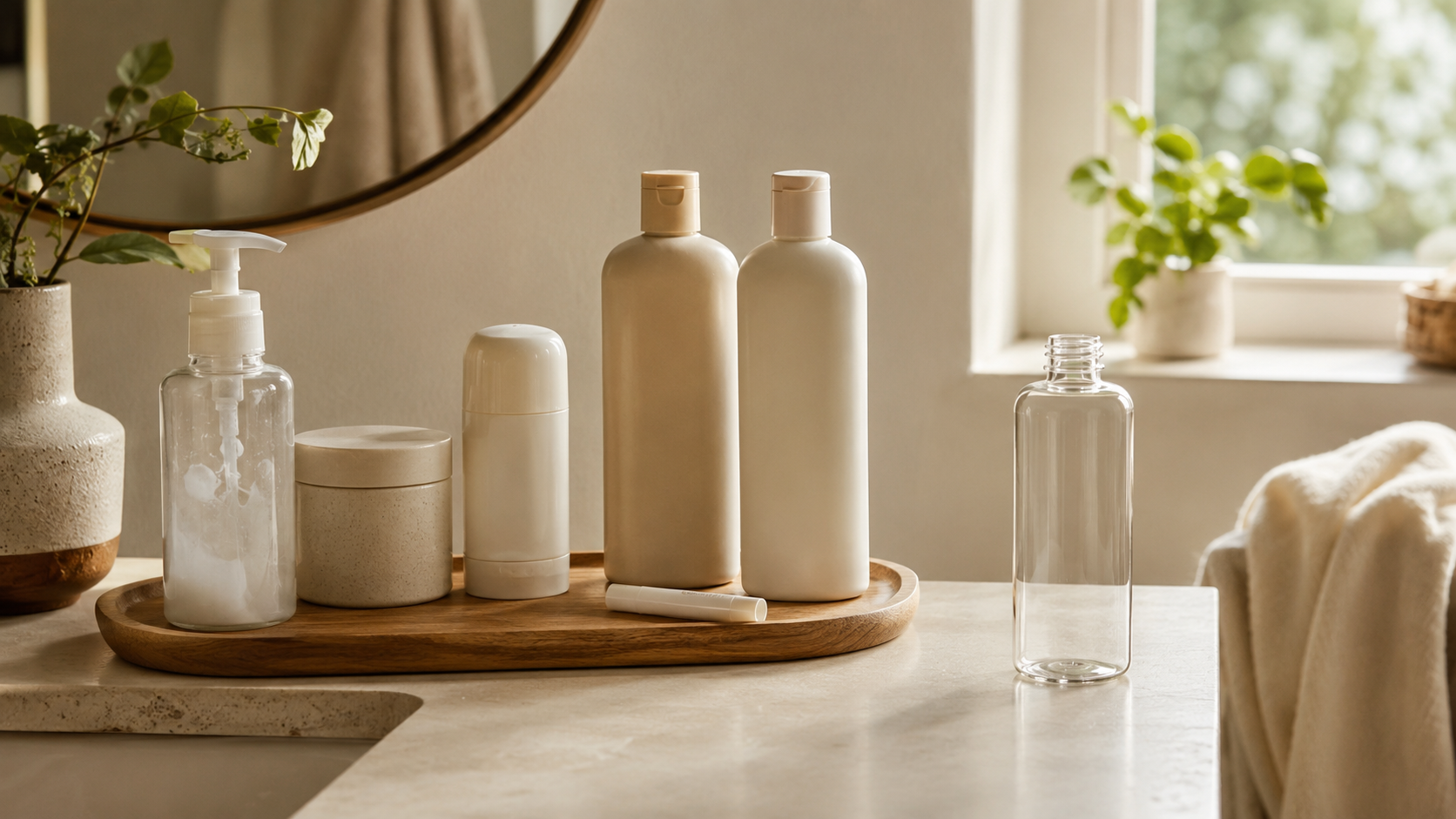
This is called the empty bottle rule and it's the only framework you need for the first year of this journey. No throwing things away. No dramatic bathroom purge. No guilt about the stuff you already own.
Why does this work so well?
It costs you literally nothing extra. You were going to replace it anyway.
No waste. Full bottles in the bin = money in the bin = unnecessary.
You have time to research properly instead of panic-buying something that turns out to smell like a forest floor and costs $45.
It's manageable. One product at a time is not overwhelming. Fifteen products at once is how people quit.
The transition I made over two years felt completely natural because of this rule. My bathroom didn't change overnight — it just quietly evolved, bottle by bottle.
Okay but where do I actually start? A priority list based on exposure
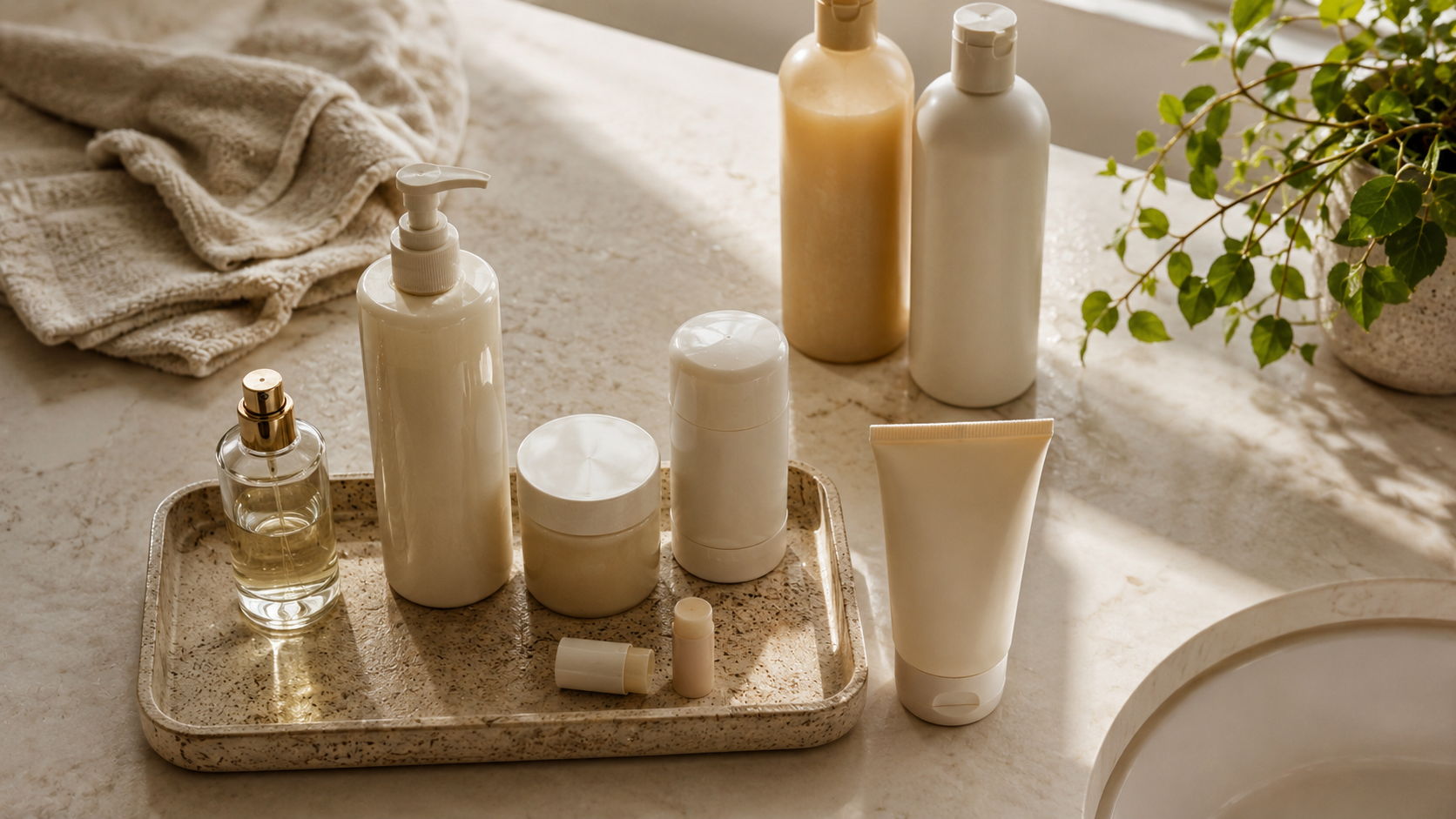
Not all products are equally worth stressing about. In toxicology, exposure depends on a few key factors: how long something stays on your skin, how large an area it covers, and how often you use it. Leave-on products applied all over your body every day = highest priority. Rinse-off products you wash off in 20 seconds = lower priority.
Here's how I'd stack-rank your swaps:
Start here — these are the highest-exposure products
Fragrance / perfume. Synthetic fragrance is a bit of a black box — "fragrance" on a label can stand in for a whole list of undisclosed ingredients, which is exactly why fragrance-sensitive people avoid it. If scent is something you react to or want to simplify, this is one of the higher-impact swaps. The good news: there are lovely natural fragrance alternatives now, and I've got a whole guide to those.
Body lotion and moisturizer. Large surface area, left on your skin, used daily — so it's worth prioritizing early. Not because one tub is going to hurt you, but simply because of all that contact time.
Deodorant. A daily, leave-on product on a large, absorbent area, which makes it a sensible early swap if you want one. (You may have seen scary claims linking deodorant to breast cancer — worth knowing that major cancer organizations say the evidence doesn't support that. The reason to swap is "daily leave-on," not "it causes disease.")
Lip products. A little of what goes on your lips ends up ingested over the day, so it's a reasonable one to check — not an emergency, just a glance at the label.
Next up — beauty, then the rest of your home
Shampoo & conditioner — especially anything you leave in or use as a treatment
Sunscreen — if you're applying it to your whole face and body daily, it adds up (and to be clear: wearing sunscreen beats skipping it every single time — this is about which one, not whether)
Cleaning sprays — because you inhale these, not just absorb them through skin
Someday items — genuinely lower priority
Cookware (Teflon → stainless steel or cast iron — takes time and money, no rush)
Scented candles and plug-in air fresheners (VOC exposure, but lower than what's going on your skin)
Plastic food containers (swap to glass gradually as they wear out — don't throw away full Tupperware)
How to actually research without it becoming a second job
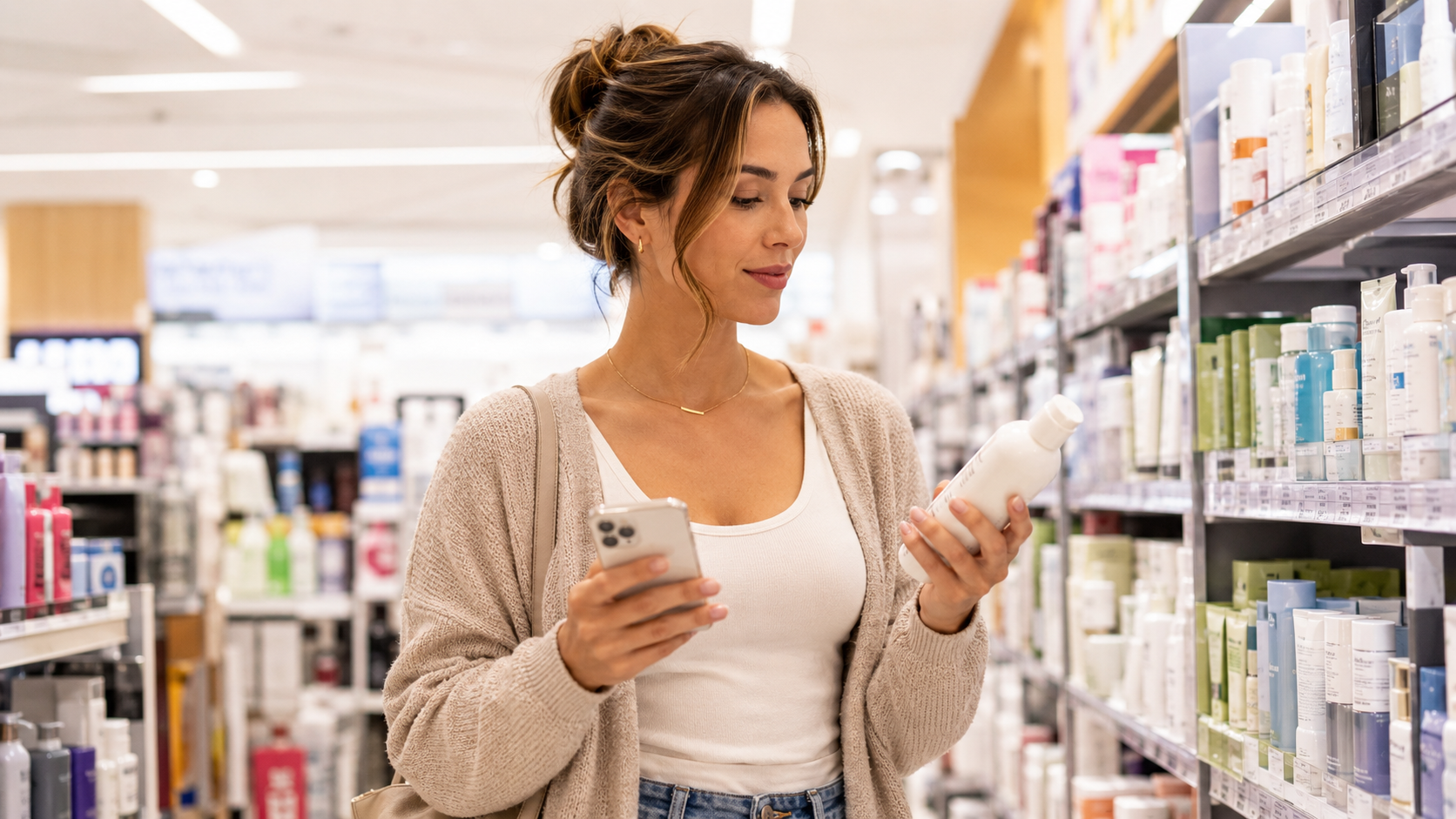
You don't need to research every ingredient — you just need one quick habit. I keep a scanner app on my phone (Think Dirty is the one I actually reach for) and scan barcodes right there in the aisle. It gives you an instant read, which is perfect for comparing two bottles on a shelf — sometimes the "clean"-looking one scores worse than the plain drugstore option next to it.
One thing so the apps don't stress you out: they lean cautious and can make perfectly ordinary ingredients look scarier than they are. Use them to compare and to spot your own known irritants, not as a final verdict. If you want the real breakdown — which tools to trust, how to read a label yourself, what "clean" and "natural" legally do (and don't) mean — that's the whole job of my companion guide. It's the deep dive, so this one gets to stay practical.
Low tox on an actual budget (not an aesthetic budget)
I see you, and I know what you're thinking. "Clean beauty" as a space can feel like it costs approximately one month's rent. Linen everything, $90 face oils, glass bottles with serif fonts. And look, some of that stuff is genuinely great. But you do not need any of it to reduce your exposure.
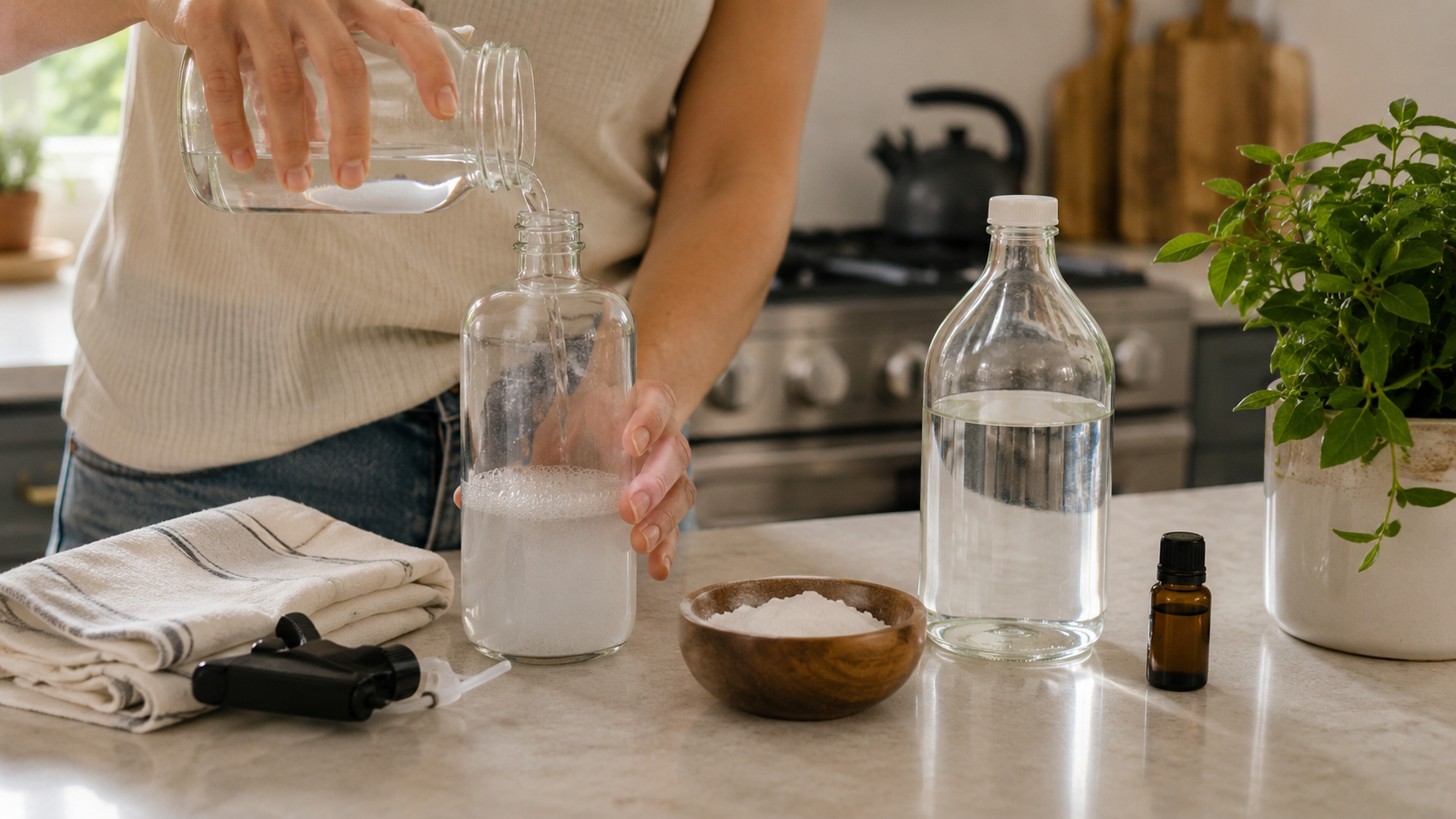
Make your own cleaners. White vinegar + water can make a simple, inexpensive cleaner for some household surfaces. Add a few drops of tea tree oil if you like the scent, but don't treat it as a universal disinfectant. Baking soda + castile soap can work well for certain scrubbing jobs. The goal isn't to turn your kitchen into a chemistry lab — it's simply to simplify where it makes sense.
Drugstore, actually. Brands like Pipette, Honest Beauty, and Native are widely available at mainstream retailers, so you don't have to shop small-batch artisan to shop cleaner.
Simplify ruthlessly. Every product you eliminate is a product you don't have to research, replace, or pay for. One good face oil can replace your moisturizer, serum, and facial mist. Three products become one. Less to worry about, less to spend.
Concentrates for cleaning. Brands like Branch Basics and Blueland sell concentrated refill pouches that can reduce packaging and may work out cheaper per use than ready-made bottles. One pouch, multiple spray bottles, done.
Nobody in the low tox space will say this, so I will
I need to say something that nobody in the low tox space says enough:
If obsessing over ingredients is making you more anxious, you are not winning at this. You are losing.
The goal here is to feel better — physically and mentally. If you're reading ingredient labels at 2am with your heart racing, that's not the version of this I'm selling you.
Think of your exposure as a dial, not a light switch. You're just trying to slowly turn it down over time. You will use a "conventional" product sometimes. You will eat food that touched plastic. You will borrow someone's shampoo. None of this undoes your progress. None of it is a moral failure.
Progress, not perfection. One swap at a time. That's genuinely the whole philosophy.
Not sure where to begin on a Sunday? I put together a full low-tox Sunday reset routine that walks through everything room by room — it's the practical version of everything we just covered.
Your first week — and it costs nothing
Repeat after me: no purchases yet.
Days 1–2: Download Think Dirty. Scan 5 products you use every single day. Just look. No judgment, no action yet — just information.
Day 3: Identify the one product you use most that stays on your skin the longest. That's your first swap candidate when it runs out.
Days 4–5: Look that product up with your scanner app and find one simpler alternative in the same price range. You don't have to buy it yet — just find it and save the link.
Day 6: Look at your cleaning cupboard. Pick one product you could eventually simplify or replace. That's it.
Day 7: Rest. You started something that most people only think about. That matters.
Small changes, one by one
Here's the truth about low tox living: it's not about being perfect, and it's not about spending more. It's about paying attention — slowly, intentionally, without burning your entire bathroom to the ground over a midnight scroll spiral.
There's enough real research here to take the conversation seriously — but not enough certainty to panic. The honest move is to hold both of those at once: worth paying attention to, not worth losing sleep over. And "paying attention" just means making a slightly better choice the next time a bottle runs out. That's it. That's the whole ask.
Start with your beauty routine. Then, if you want to, let those small changes spill into the rest of your home and everyday life.
Want to make sure no brand ever rips you off with the word "clean"? My companion piece breaks down exactly how to see through the marketing and shop smart — read it here. It's the perfect sidekick to this guide.
Start small and keep going. That's really all it takes. A year from now, your bathroom will look noticeably different, without ever having to do a big overhaul.
You've got this. Now go to sleep.
A quick note on sources: the research behind this is real, and I'd rather keep it out of your way than bury you in it. If you like receipts, the key research includes work examining phthalate exposure from fragranced products, research into endocrine-active cosmetic ingredients, and exposure surveys from organizations such as the Environmental Working Group. Worth knowing: EWG leans to the cautious side of the debate, so I treat their numbers as a nudge to pay attention, not gospel — more on that in the companion piece. None of this is medical advice; I'm just someone who reads labels.