You've probably landed here because the word clean is on everything — your moisturizer, your mascara, the ad that followed you across three apps — and you've decided you want to make better, lower-tox choices. Good. The only thing standing between you and that is a wall of marketing: which of this is real, and which is just a word on a jar? This guide hands you the one skill that cuts through it, so you can go lower-tox without spending a fortune or getting played.
Here's the honest, friend-to-friend promise before we go further: you can start today, for free, you don't need to panic-toss anything this week — and once you can read past the marketing, going lower-tox gets easier and cheaper. Most "clean beauty" content skips this part, because they're usually trying to sell you something at the end. I'm just trying to make you un-rip-off-able, so that when you do swap something, you swap it for the right reasons.
Quick bit of honesty about me: this whole thing started when I noticed a few bald patches and began making my own hair oil, just to feel like I was doing something. One kitchen experiment led to another — now I make my own laundry detergent, fabric softener, and perfume too. So I've spent plenty of time squinting at ingredient lists. This is what I learned.
First, the thing no one selling you "clean" says out loud
There is no legal definition of "clean beauty" in the United States. None. No government agency certifies it, no shared standard defines it, and no one is checking. Each brand and each retailer simply invents its own rules and prints the word on the jar.
That's not a conspiracy theory — even the brands that market "clean" products will quietly admit it in their own blog posts. One store's "clean" might mean fragrance-free. Another's might mean plant-based. A third's might just mean the packaging is beige and the font is lowercase. All three get to use the same word, and all three are technically telling the truth.
So here's the single most useful mindset shift, and it's genuinely empowering once it clicks: "clean" is where your questions start, not where they end.
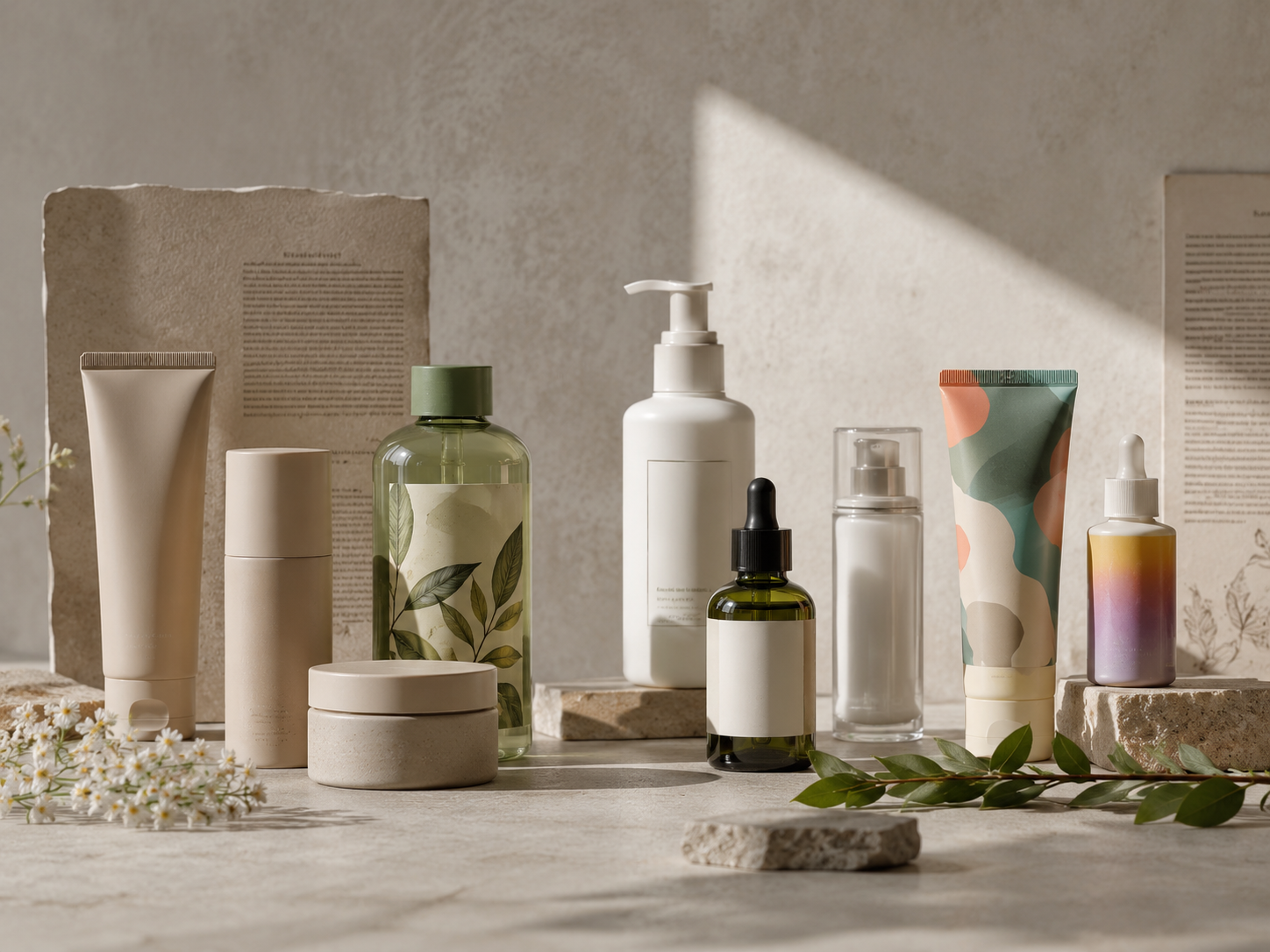
It's a marketing word, not a safety guarantee. The moment you stop treating it as a stamp of approval and start treating it as "okay, now let me actually look," you stop being a target and start being a smart shopper. That's the whole skill this guide teaches.
Where the real scam is (and it's not low tox)
Let's be clear about who's actually pulling a fast one here. Going lower-tox — fewer irritants, more transparency, simpler routines — is a genuinely good move, and I'll show you exactly how to do it. The scam isn't the lifestyle. The scam is the brand that charges you extra for the word "clean" while the formula inside is the same as the drugstore version — or worse, packed with the essential oils and botanicals most likely to wreck sensitive skin.
That's what your skepticism is for. Not to talk yourself out of making better choices — you're right to want them — but to make sure the "clean" premium you pay actually buys you something. Being told conventional products are quietly poisoning you? Fear tactic, side-eye it. Being sold a beige jar with a lowercase font at triple the price? That's the one to catch. Aim your suspicion at the marketing, not at the goal, and you get all the upside without getting played.
Natural doesn't mean safe (and "chemical" isn't a dirty word)
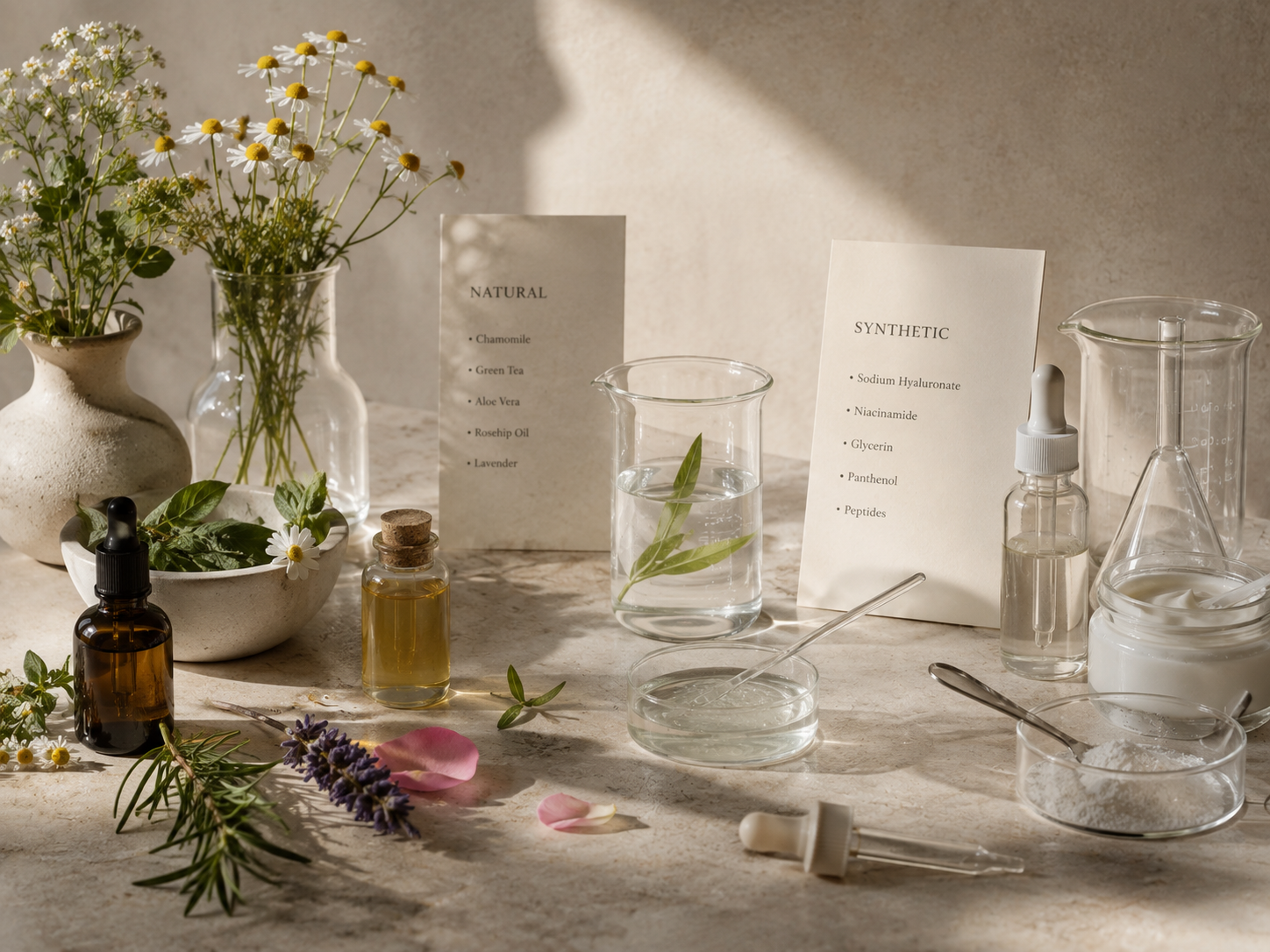
The most common sales pitch is "no scary chemicals." But everything is a chemical — water is a chemical, and so is every plant extract in that gorgeous $60 serum. What makes an ingredient risky isn't whether it came from a lab or a leaf; it's the dose and the context. Poison ivy is 100% natural. Peanut oil is natural and can send someone to the ER. Meanwhile, plenty of lab-made ingredients are among the gentlest, best-studied things you can put on your face.
And "natural" products aren't automatically kinder to sensitive skin. Botanical extracts and essential oils are some of the most common triggers for contact dermatitis — those itchy, red, "why is my skin freaking out" reactions. A dermatology review of top-selling body moisturizers found that the overwhelming majority of products marketed as "hypoallergenic" still contained at least one known allergen, and nearly half of the ones labeled "fragrance-free" contained botanical fragrance ingredients. The reassuring label and the actual formula don't always match.
None of this is a reason to back off — it's a reason to shop with your eyes open. The label on the front is the last thing to trust; the ingredient list on the back is where the truth is. Learning to read it (five minutes, promise, and it's below) is what lets you go lower-tox and dodge the products that would irritate you. Skepticism and low tox aren't opposites here — skepticism is the tool that makes low tox actually work.
The reasons this is genuinely worth doing
Here's the affirming part, and I mean it: choosing to go lower-tox is a smart, valid thing to do — and there are real reasons behind it, none of which require any fear-mongering to justify:
You react to fragrance or certain preservatives and want them out of your routine. Real, personal, valid.
You want transparency — brands that tell you exactly what's inside and where it came from.
You care about cruelty-free or sustainability and want your money to reflect your values.
You want a shorter, simpler routine. Fewer products, fewer variables, less decision fatigue, less spent.
These are good reasons, full stop. You don't need to believe your shampoo is poison to want any of them — and that's the healthiest way in. Pursue the good reasons, tune out the panic, and you end up with a routine that's calmer, cheaper, and genuinely yours. That's not doing less. That's doing it on purpose.
What actually changed in 2026 (the MoCRA thing)
Here's the genuinely new information almost no guide mentions, and it's good news for you as a shopper.
For 84 years, U.S. cosmetics were governed by a few thin pages of a 1938 law — no required registration, no mandatory safety files, no recall power. That changed with the Modernization of Cosmetics Regulation Act (MoCRA), signed in late 2022 and now, in 2026, actually up and running. It's the biggest overhaul of U.S. cosmetics regulation in generations.
What it means for you, in plain English:
The FDA can now force recalls of unsafe cosmetics and inspect company records — powers it simply didn't have before.
Companies must register their facilities and list their products with the FDA, and report serious bad reactions within days.
Product labels now have to carry a U.S. contact so you can report a reaction. Flip a newer product over — that contact info is there because of this law.
There's now a public dashboard of reported adverse events, which quietly rewards brands that make safer products.
But — and hold onto this — MoCRA still does not require the FDA to pre-approve cosmetics or define what "clean" or "natural" means. The U.S. still restricts far fewer cosmetic ingredients than the EU does. So the shelf is more accountable than it was three years ago, but "clean" is still doing your thinking for you unless you check. The ground is a little safer — and your ingredient label is still your best friend.
The skill that makes you un-rip-off-able: reading a label
This is the single thing that turns you from a target into a smart shopper. You don't need to memorize anything. I first learned this when I started making my own hair oil — turns out a genuinely good formula is often surprisingly short.
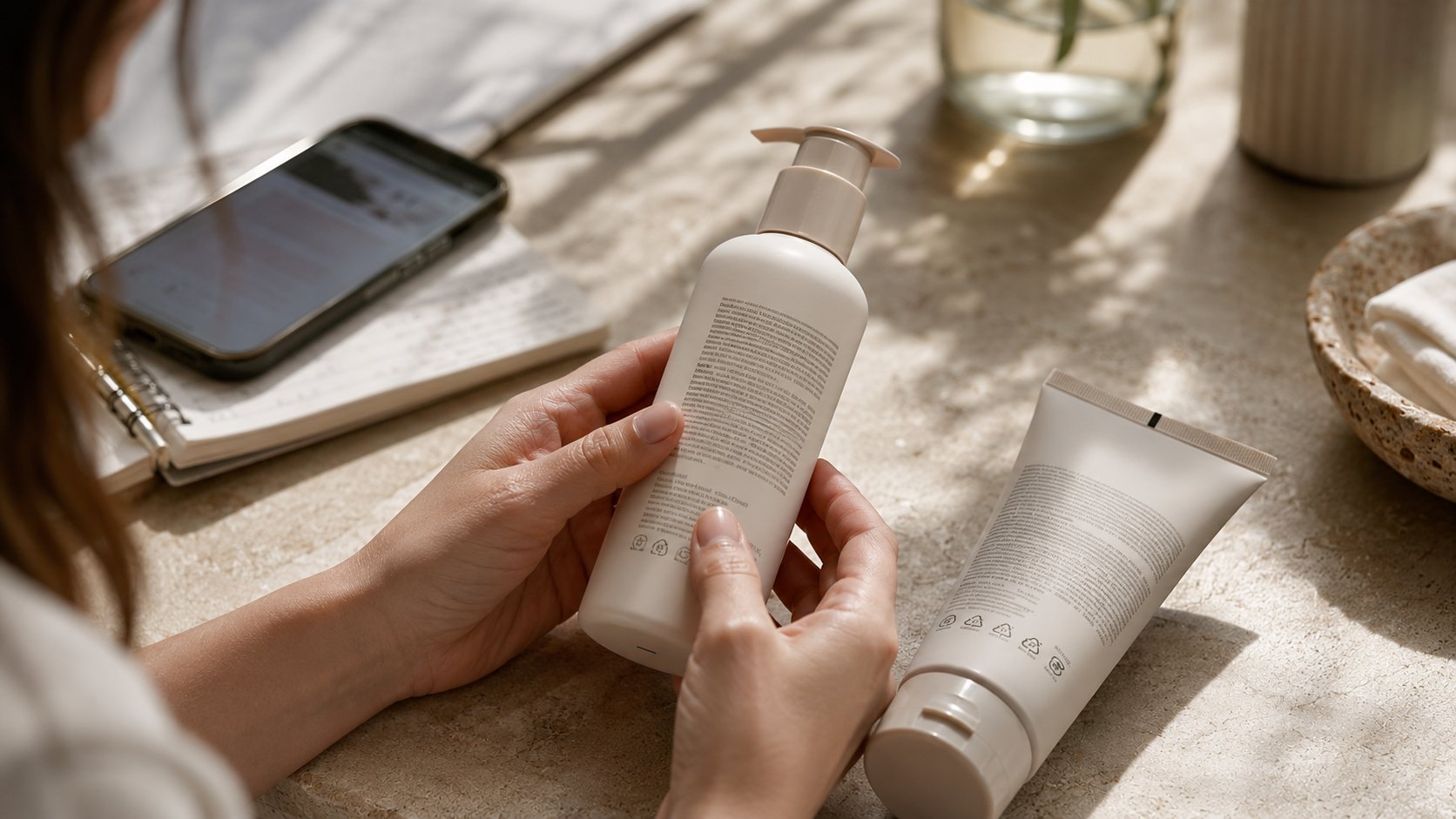
Ingredients are listed by amount, most to least. So the first five ingredients basically are the product. If a hero botanical is dead last, it's fairy dust — there for the label, not your skin.
Match the front to the back. If the front screams "aloe and rosehip" but water and glycerin top the list and the plant stuff is at the bottom, you're paying for marketing.
Learn your few triggers, not all 8,000 ingredients. Most people only need to recognize a handful of things their own skin dislikes — often fragrance or a specific essential oil. That's it.
Know that "fragrance"/"parfum" is a catch-all that can hide many undisclosed ingredients — which is exactly why fragrance-sensitive folks look for "fragrance-free" (note: unscented can still contain masking fragrance; they're not the same).
Five minutes on the back of the jar beats any adjective on the front. Do this once and you'll never shop the same way again.
Use the apps — but use them wisely
Free tools make label-reading painless: Think Dirty lets you scan a barcode for a quick read, and INCIDecoder lets you paste an ingredient list and explains what each ingredient actually does. Both are great learning tools.
One honest caveat, because I promised no hype: apps like Yuka and the EWG Skin Deep database tend to score by hazard rather than dose, so they can make ordinary, safe ingredients look scarier than they are. Use them to learn and to spot fragrance or your known personal irritants — not as gospel. If an ingredient rates "bad" but a dermatologist and a cosmetic chemist both shrug at it, believe the humans. Used this way, the apps are a fantastic shortcut; used fearfully, they'll just stress you out. You're in charge, not the score.
Where clean beauty actually goes wrong (so you can dodge it)
To save you money and possibly your skin barrier:
Watch essential-oil-heavy "clean" products if your skin is sensitive. "Natural" and "gentle" are not synonyms.
Don't pay a premium for the word "clean" alone. Expensive doesn't mean better — often the priciest part of a product is the jar and the fragrance. Judge the formula.
Ignore "dermatologist tested." It can mean one dermatologist glanced at it once. It's not a safety certification.
Skip the "24K gold / crystal / gold flakes" gimmicks. They do nothing for your skin except the price tag.
Shop smart: spend vs. save
A simple money rule most experts agree on: spend on what stays, save on what rinses off.
Worth a little more: leave-on products doing real work — a good moisturizer, a serum you'll use consistently, and above all sunscreen.
Save your money: cleansers and anything you rinse in seconds, plus the gimmick ingredients above.
Other smart-shopper moves: replace things as they run out (never waste what you own), grab travel sizes to test before committing, and if certifications matter to you, know what they actually mean. USDA Organic (95%+ organic) is the one seal the FDA recognizes. EWG Verified, Leaping Bunny (cruelty-free), MADE SAFE (one of the stricter non-toxic seals), and COSMOS/Ecocert are reputable but private third-party programs — handy shortcuts if you'd rather not vet every ingredient yourself, as long as you know what each one actually promises.
So — where does this leave you?
Un-rip-off-able, that's where. You can walk down any aisle, flip over any jar, and tell the real thing from the marketing in about thirty seconds. There's no overhaul to do tonight — half the shelf you already own is probably fine, and now you can tell which half. That alone saves you money most "clean" guides would rather you spend.
When you're ready to actually start swapping, you don't have to work out the order yourself. The calm, one-bottle-at-a-time plan — what to change first and why, without the overwhelm — is laid out step by step in my low tox beginner's guide. That's the natural next read. And when you'd rather make a product than buy one, my DIY recipes (starting with the rosemary hair oil that started my whole journey) show you how, for pennies.
You came here to make better, lower-tox choices. Now you can — with your eyes open, your money where it matters, and nobody selling you fear. That's the whole point.
Frequently asked questions
Is clean beauty actually better for your skin? Not automatically — and that's good news, because it means you get to decide based on the formula instead of the label. "Clean" or "natural" products aren't inherently better or worse than conventional ones — naturally derived ingredients can irritate, and well-formulated synthetic ones can be gentle and effective. Learn to read the first five ingredients (it takes five minutes), match the front of the jar to the back, and you'll pick better products than any "clean" sticker could point you to.
Is clean beauty a scam? The concept isn't, but it's oversold, and some brands lean on fear ("toxins!") to sell it. "Clean" has no legal U.S. definition, so treat it as a starting question, not a guarantee. The move is to pursue it for the good reasons — avoiding your personal irritants, transparency, cruelty-free, a simpler routine — and let the ingredient list, not the marketing, make your call. Do that and you get all the upside with none of the markup.
Where should a beginner start? Start free, and start with your eyes, not your wallet: learn to read a label (the section above takes five minutes) so you can tell which of your current products are already fine — usually about half. From there, the actual swap order — what to change first and why — has its own full walkthrough in my low tox beginner's guide, built around replacing things one empty bottle at a time.
Is natural skincare safer than synthetic? Not necessarily — so let your own skin be the judge. Plenty of natural ingredients (essential oils, some botanicals) are common allergens, while many synthetic ingredients are extremely well-tolerated. The origin doesn't determine safety — the dose and the formula do. Patch-test anything new, watch how your skin actually responds, and trust that over the word on the front.
Do I have to throw away my current products? No — and please don't, because that's just money in the bin. If something works and doesn't irritate you, keep using it, then choose a simpler swap when it runs out. Transitioning one empty bottle at a time is cheaper, less wasteful, and the easiest way to build a routine that actually sticks.
What do clean beauty certifications actually mean? USDA Organic is the one seal the FDA recognizes (95%+ organic ingredients). EWG Verified, Leaping Bunny (cruelty-free), and COSMOS/Ecocert are reputable but private third-party programs — useful shortcuts once you know what each one actually promises. Meanwhile, treat "dermatologist tested" and "hypoallergenic" as marketing, not guarantees. Use the real seals to narrow your options, then let the ingredient list make the final call.
Want the short version for your phone? Grab the free Clean Beauty Starter Checklist — the "first five ingredients" cheat sheet on one page. And when you're ready to actually start swapping, head to the low tox beginner's guide for the one-bottle-at-a-time plan.