
Every year it happens in the same week. The heating goes on, the wind picks up, and suddenly my face feels like it’s a size too small. Tight after washing, a bit flaky around the nose, lips that sting when I even look at lip balm. Sound familiar?
The good news: you don’t need a twelve-step routine or a whole new shelf of products. Most winter dryness gets better with a few small changes to what you already do. This is the simple, calm version.
Why does skin get so dry in winter?
Cold outdoor air holds less moisture, and indoor heating dries the air even more. Your skin is stuck in between: less humidity around it, more water escaping from it, plus hot showers that strip away its natural oils. When your skin’s outer barrier gets worn down, you get that tight, rough, sometimes itchy feeling.
So the goal in winter isn’t to add ten new things. It’s to add moisture, hold it in, and stop stripping it away.
The simple winter skincare routine
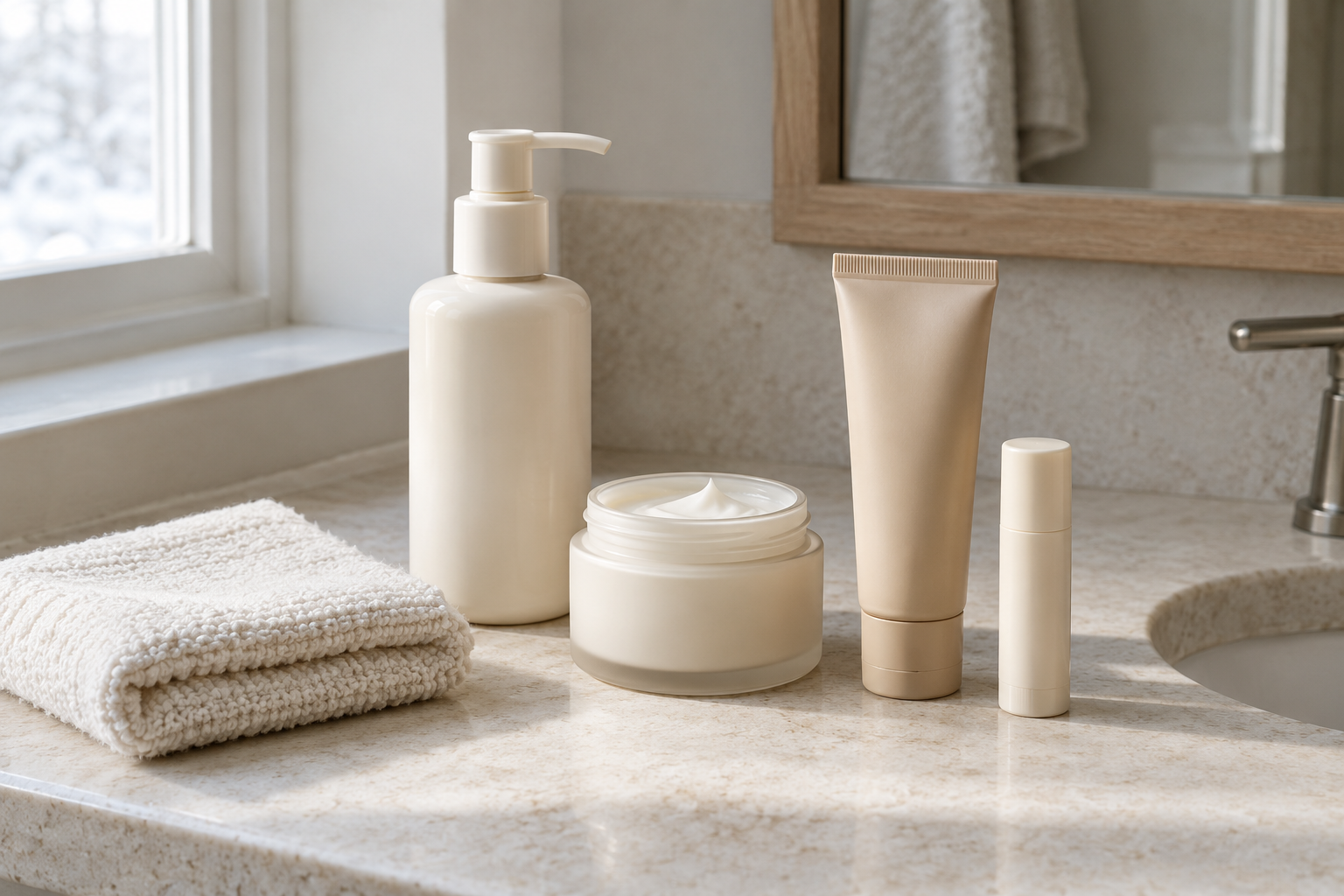
Morning
Rinse or cleanse gently. If your skin feels dry in the morning, you can often just rinse with lukewarm water. If you do use a cleanser, choose a mild one that doesn’t leave your face squeaky.
Moisturize while your skin is still slightly damp. This helps lock in water. Switch to something richer than your summer moisturizer if the lightweight one isn’t cutting it.
Sunscreen, yes, even in winter. UV rays are still there on cold, cloudy days, and snow reflects them. Keep your usual sunscreen in the routine. The American Academy of Dermatology recommends a broad-spectrum, water-resistant sunscreen with SPF 30 or higher.
Lip balm. Put it on before you go out, not after your lips are already sore.
Evening
Cleanse, then stop. One gentle wash is enough. If you wear sunscreen or makeup, remove it properly, but skip harsh scrubbing.
Moisturize again. At night you can go richer. Creams and ointment-type products tend to hold moisture better than thin lotions.
Optional extra layer on the driest spots. A thin layer of a simple, fragrance-free balm over cheeks, around the nose or on lips can help overnight.
8 small changes that make a big difference
1. Turn the shower down a notch
Hot water feels amazing in winter, but it’s tough on your skin. Go for lukewarm and keep it short, especially on your face, which doesn’t need the full blast.
2. Moisturize right after washing
The few minutes after you wash are your best window. Pat your skin dry, leave it a little damp and put on moisturizer straight away. It’s a tiny habit with a visible payoff.
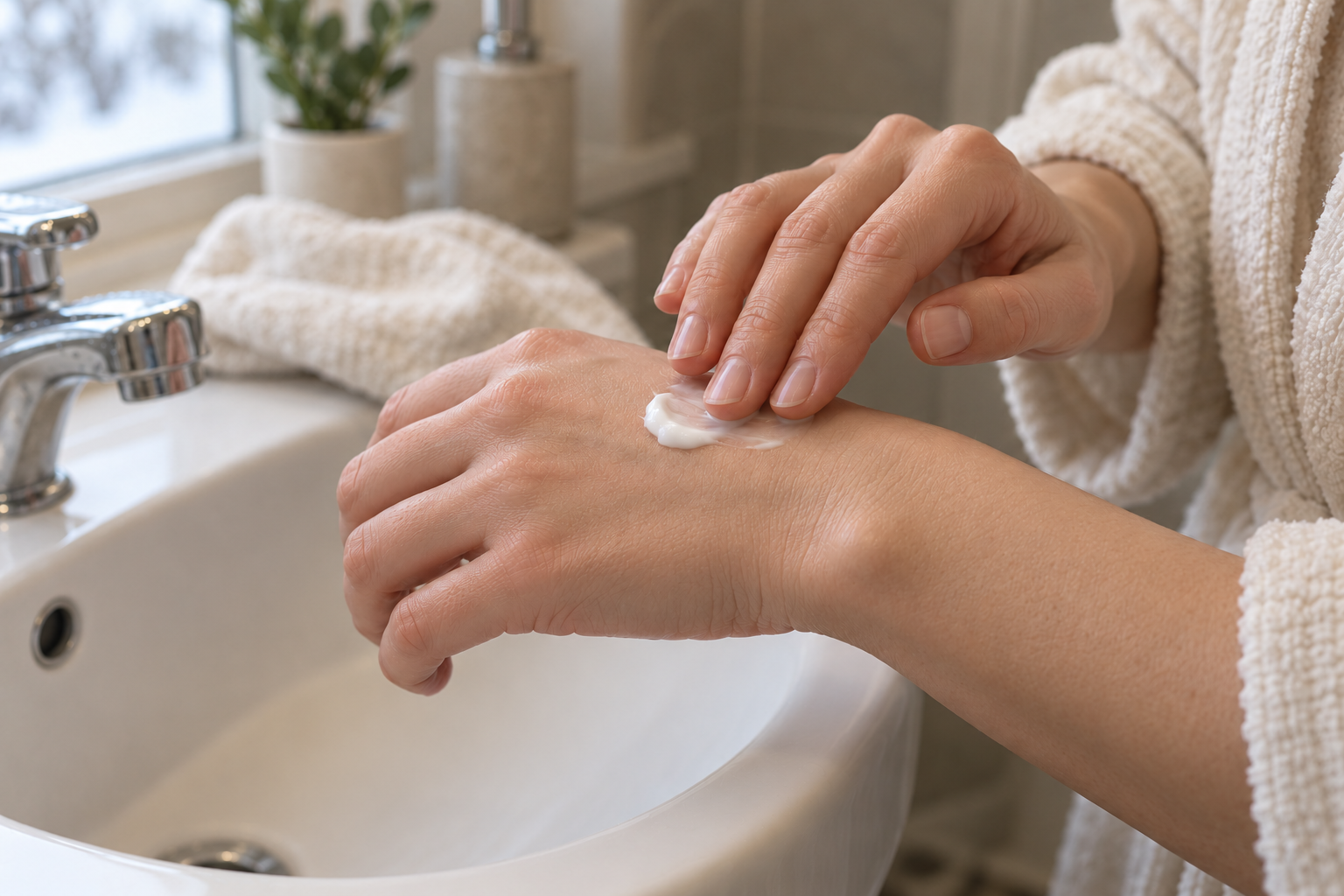
3. Choose a richer texture, not more products
If your lotion isn’t enough, swap it for a cream or a thicker formula rather than piling on extra steps. Look for a texture that feels comfortable on your skin and that you’ll actually use every day.
4. Go gentle on exfoliating
Flaky skin tempts you to scrub, but over-exfoliating can make a stressed barrier even worse. If your skin is dry or irritated, give scrubs and strong exfoliating acids a break and focus on moisture first.
5. Add a humidifier if you can
Dry indoor air pulls moisture out of your skin all day and night. A humidifier in your bedroom is one of the easiest ways to help, especially if the heating runs a lot.

6. Protect your hands and lips
Hands and lips get the worst of it. Keep a hand cream where you actually use it (by the sink, in your bag), and put on gloves outside. Reapply lip balm through the day.
7. Keep an eye on fragrance
Dry, sensitive winter skin is often more reactive. If your skin feels irritated, choose fragrance-free products. Note that “unscented” is not the same thing. The AAD suggests looking for fragrance-free products if you react to fragrance.
8. Drink water, eat well, but don’t expect miracles from it
Staying hydrated and eating well is good for you overall, but it won’t fix dry skin by itself. Your moisturizer and your habits do most of the work on the outside.
Swap, don’t overhaul
You don’t need to throw out your summer products. Think of it as a seasonal swap, in the same way you’d swap your sandals for boots:
Lightweight moisturizer → a richer cream
Foamy cleanser that leaves skin tight → a gentler, creamier one
Plain body lotion → a thicker body butter or cream
Basic lip balm → something more protective, and more of it
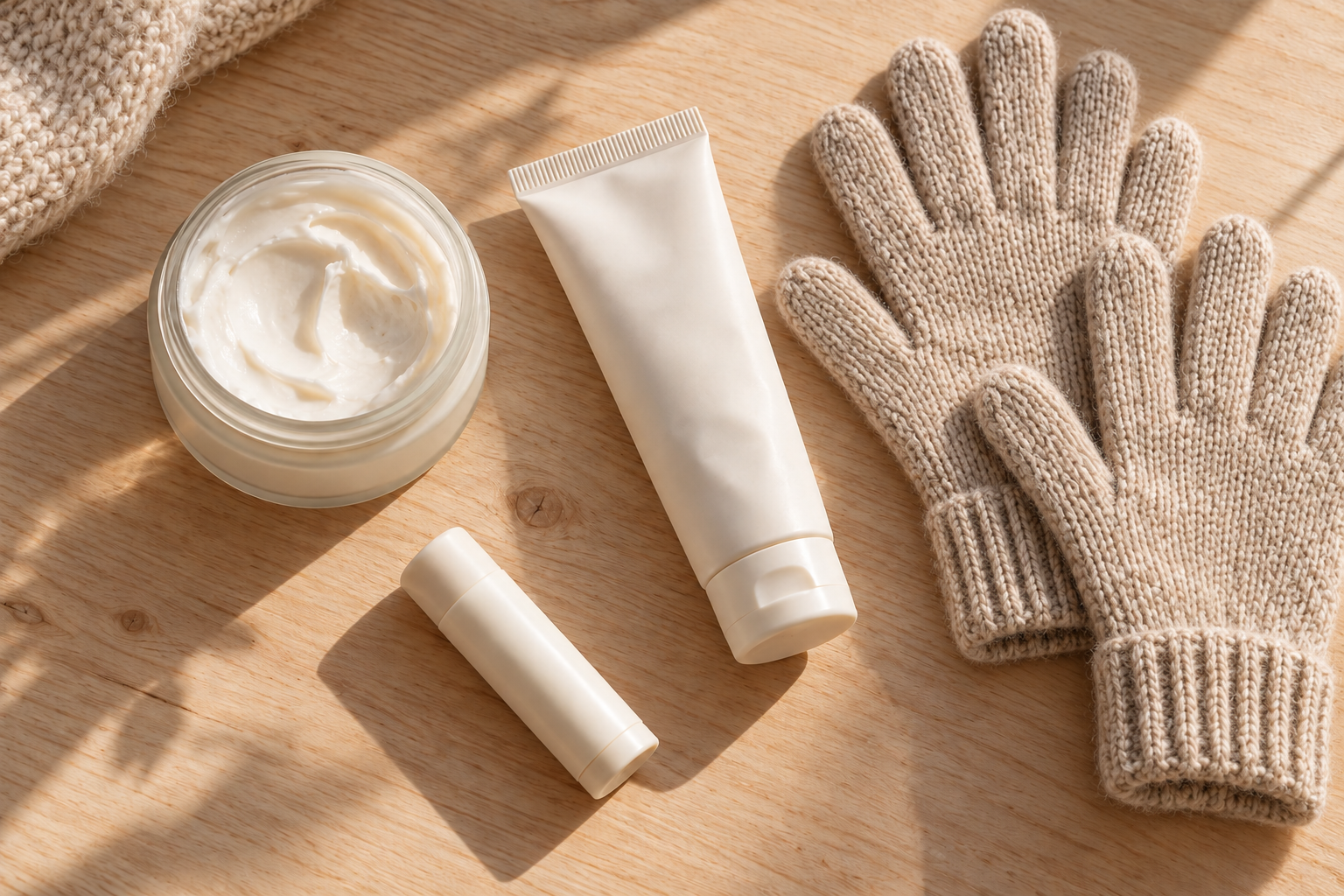
Swap them as your current products run out, one at a time. If you want more fall-to-winter swap ideas, have a look at our 10 clean beauty swaps for fall, and if you’re brand new to all this, start with our low-tox living for beginners guide.
Introduce new products slowly
Winter skin is more sensitive, so don’t start five new products on the same day. Add one thing at a time and try it on a small area first. If something stings, itches or turns red, stop using it.
When to see a doctor
Normal winter dryness should improve with the steps above. See a doctor or dermatologist if your skin is very itchy, cracked or bleeding, develops a rash, or doesn’t get better after a couple of weeks. This can be a sign of eczema or another skin condition that needs proper care, and a better moisturizer alone won’t fix it.
Your cold-weather checklist
Lukewarm showers, kept short
Moisturizer on damp skin, morning and night
A richer texture than your summer one
Sunscreen every morning
Lip balm and hand cream within reach
A humidifier in the bedroom, if possible
One new product at a time
Looking for something cosy to give someone who’s always dealing with dry skin? My Clean Beauty Gift Guide 2026 has easy, thoughtful picks sorted by budget, including a fragrance-free lip care option.
Frequently asked questions
How often should I moisturize in winter?
At least morning and night, and after washing your face or hands. If your skin feels tight, add a thin extra layer on the driest areas.
Do I still need sunscreen in winter?
Yes. UV rays are present even on cold and cloudy days, and snow can reflect them. Keep sunscreen in your morning routine.
Why is my face dry even though I moisturize?
It could be that your moisturizer is too light for the season, you’re washing with water that’s too hot, you’re over-exfoliating, or the air is very dry. If it doesn’t improve, speak to a dermatologist.
Do I need a different routine in winter?
Not a whole new one. Most people only need a richer moisturizer, gentler cleansing and more attention on lips and hands.