Laundry detergent seems boring… until it isn’t.
I used to buy whatever smelled the strongest. I thought “fresh scent” meant “super clean.” Then I started noticing little things.
My shirts would smell like perfume for days. Some towels felt stiff. And sometimes my skin felt itchy for no clear reason.
That’s when I started looking for non-toxic laundry detergent.
A lot of people are making the same switch. They want:
Cleaner clothes
Less skin irritation
Fewer harsh chemicals
A healthier home
A more planet-friendly routine
And honestly? Laundry is a great place to start. Detergent touches your pajamas, underwear, sheets, towels—everything. It’s on your skin a lot.
In this post, I’ll explain (in simple words) what makes some detergents “toxic,” what ingredients to avoid, what ingredients are safer, and how to make a DIY non-toxic laundry detergent you can try at home.
What Makes a Laundry Detergent Toxic?
First, a quick truth: everything is made of chemicals. Even water is a chemical.
So when people say “toxic,” they usually mean:
It can bother your skin (itchy, red, dry, rash)
It can bother your nose or lungs (strong smells can be too much for some people)
It can be bad for rivers and ocean life (some stuff does not break down well)
It hides ingredients under words like “fragrance”

A chemical-free laundry detergent (the way most people use that phrase) usually means a detergent with fewer harsh ingredients and fewer mystery ingredients.
A good, safe laundry detergent should be clear about what’s inside. It should also be gentle, but still clean well.
Benefits of Using Non-Toxic Laundry Detergent

Switching to a non-toxic laundry detergent can feel like a small change. But it can make a big difference.
1) It can be gentler on skin
If you have sensitive skin, or your kids do, this is huge.
Some people switch because of:
Itchy skin after wearing clothes
Rashes that come and go
Eczema flare-ups
Baby's skin is getting red
A safe laundry detergent is often fragrance-free (or lightly scented) and has fewer irritating ingredients.
2) Your laundry can smell “clean,” not “strong”
I like it when clothes smell like… nothing. Like clean cotton, not a perfume factory.
A natural laundry detergent can help you get that simple clean feeling.
3) Less gunk left on clothes
Using too much detergent is common (I used to do it all the time).
Some detergents can leave residue if you use a lot. That residue can make towels stiff and trap smells.
Many eco-friendly laundry detergent options are made to rinse out better.
4) It can be better for the planet
An eco-friendly laundry detergent often:
Breaks down better in water
Uses fewer harsh ingredients
Comes in low-waste packaging (like cardboard)
No one is perfect. But small swaps add up.
Ingredients to Avoid in Conventional Detergents
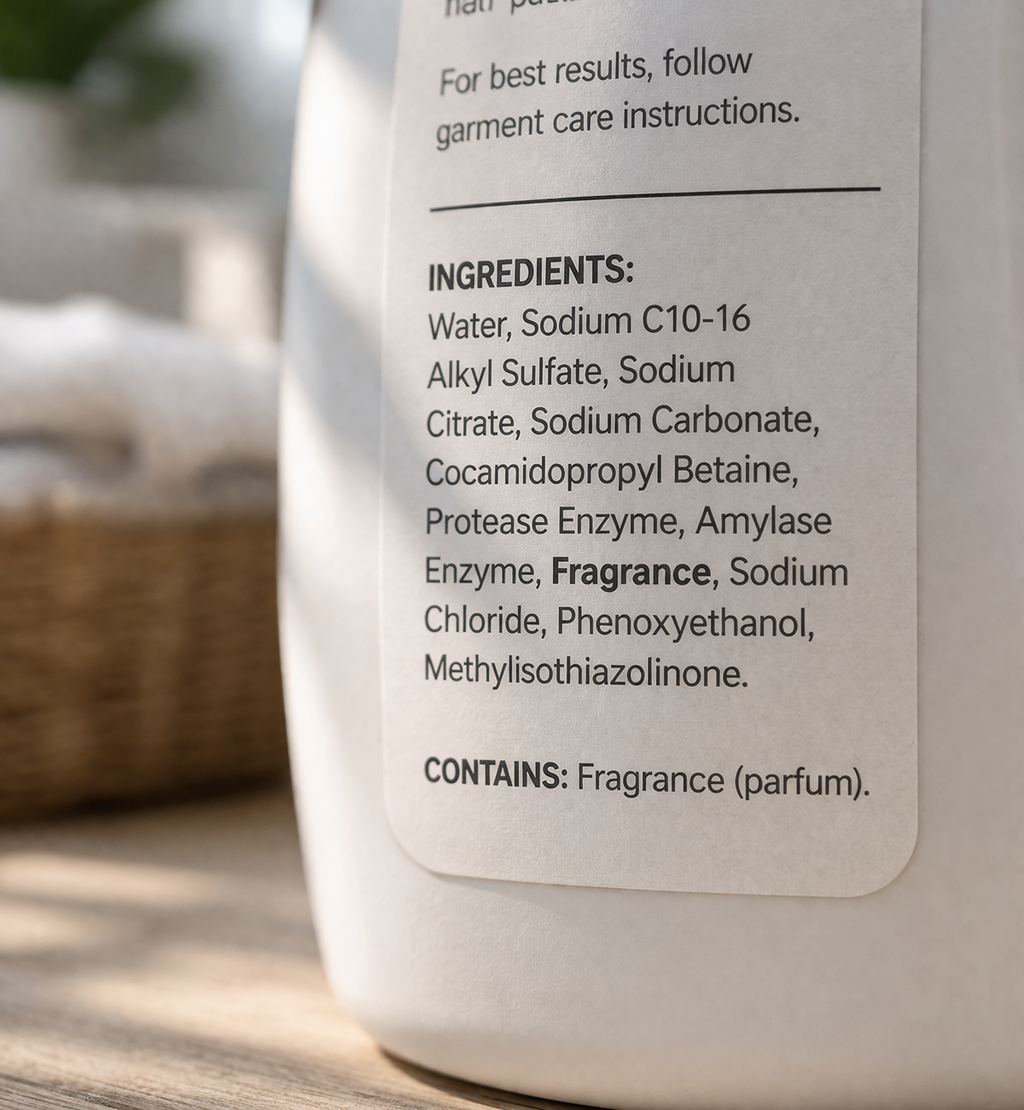
You do not have to memorize a chemistry book. But it helps to know the big ones that many people try to avoid.
Fragrance (sometimes written as “parfum”)
“Fragrance” can be a mix of many ingredients. Companies do not always list them all.
If you want the simplest option, choose:
Fragrance-free (best for sensitive skin)
Be careful with the word “unscented.” Sometimes “unscented” still has fragrance to cover smells.
Dyes and colorants
These make detergent look pretty. They do not help clean your clothes.
Optical brighteners
Optical brighteners are added to make clothes look whiter or brighter.
They do not remove stains. They can leave a coating on fabric. Many people skip them for sensitive skin.
Harsh preservatives or strong sensitizers
Detergents need preservatives so they do not grow bacteria or mold.
But some people react to certain preservatives. If your skin gets itchy, simpler ingredient lists can help.
“Ethoxylated” ingredients (simple explanation)
Some cleaning ingredients can be made in a way that leaves tiny leftover bits (as a byproduct). One byproduct people talk about is called 1,4-dioxane.
You won’t usually see it on a label.
If this worries you, look for brands that talk about:
Testing
Purity
Safer standards
Also, choosing a trusted certified product can help.
What Ingredients are Safe and Effective?
A non-toxic laundry detergent still needs to clean. You don’t want to wash clothes and hope for the best.
Here are common ingredients in a safe laundry detergent or a natural laundry detergent.
Plant-based surfactants
Surfactants are the “cleaning helpers.” They lift dirt and oil off fabric.
Many eco-friendly laundry detergent brands use plant-based surfactants.
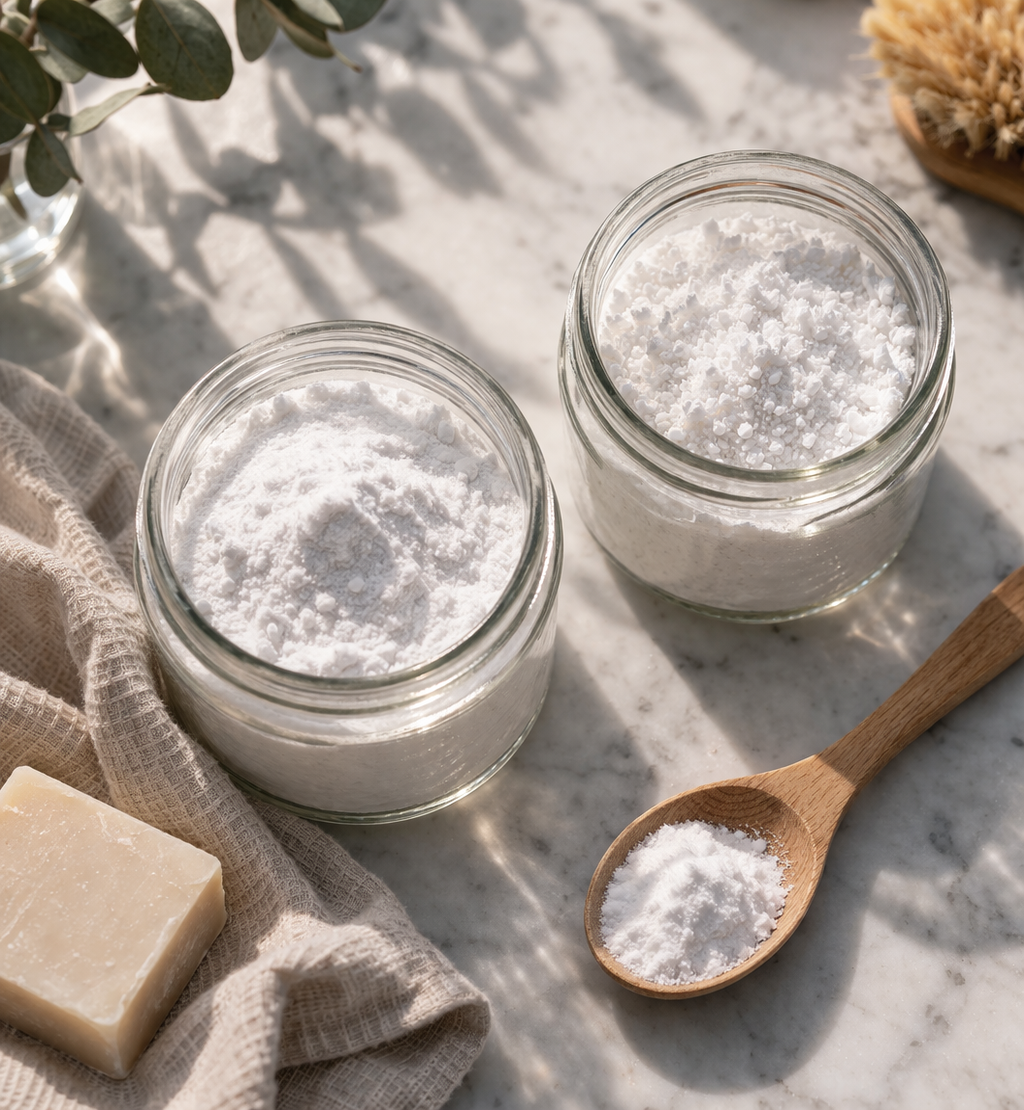
Washing soda (sodium carbonate)
Washing soda helps cut grease and clean better.
It is stronger than baking soda.
Baking soda (sodium bicarbonate)
Baking soda helps with smells. It can also give a little cleaning boost.
Enzymes
Enzymes help break down stains.
Think of enzymes like tiny stain-eaters.
They can help with:
Sweat
Food
Grass stains
Body oils
If you have kids, pets, sports clothes, or a messy life (same), enzymes can be a big help.
Oxygen bleach (sodium percarbonate)
This is a stain helper that releases oxygen in water.
It can help whiten and brighten without chlorine bleach.
Simple soap (used the right way)
Some recipes use soap.
Soap can help clean, but it can also leave residue in some machines or water types.
That’s why it matters to use the right amount and to rinse well.
DIY Non-Toxic Laundry Detergent Recipe (liquid, easy, and budget-friendly)
If you love the idea of a chemical-free laundry detergent, but you also want something that feels like a “real” liquid detergent, this recipe is a great place to start.
It makes a big batch, it’s simple, and it uses ingredients many people already keep at home.
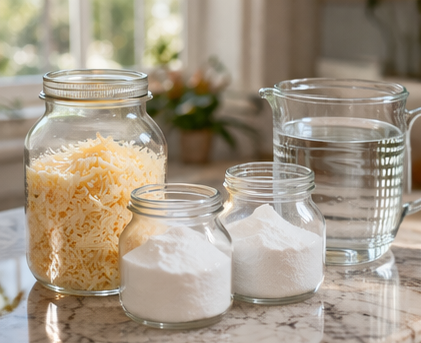
Ingredients (makes about 1 gallon)
About 2.5–3 oz grated laundry soap (roughly 1 cup loosely packed grated soap; use a plain, unscented bar)
About 1/3 cup of baking soda
About 1/2 cup washing soda (slightly under 1/2 cup is fine)
About 1 gallon of water
Tools
A large pot
Spoon or whisk
A container or jug with a lid (for storage)
Optional: immersion blender (helpful if it gets very thick)
Step-by-step instructions
Warm the water. Pour the 4 liters of water into a big pot and heat it. You want it very warm, but not boiling.
Add the soap. Sprinkle in the grated soap and stir. Keep the heat low while you stir so it can dissolve.
Stir until mostly melted. The soap should soften and blend into the water.
Add the powders. Add the washing soda and baking soda. Stir really well. Keep the water hot, but don’t let it boil.
Turn off the heat. Give it one more good stir.
Let it cool. When it’s warm (not hot), stir again and pour it into your storage container.
Blend if needed. If it turns very thick or lumpy, an immersion blender can make it smooth.
What it should look like
This DIY detergent usually cools into a gel-like liquid. That’s normal.
Before each use:
Shake or stir the container
If you want it more watery, you can mix in a little extra water after it cools.
How much to use
This depends on how thick you keep it and how big your washer is.
A simple starting point:
For a regular load (about 10–11 lb / 5 kg of clothes), start with 1/2 cup (about 120 ml)
If your clothes are not getting clean, you can use a bit more. If you see residue, use less.
Tips for best results
Put it in the drum (not just the drawer): If your machine allows it, adding the detergent right into the drum (on top of the clothes) can help it spread better.
Don’t overfill the washer: If your washer is packed tight, the water can’t move around and rinse well.
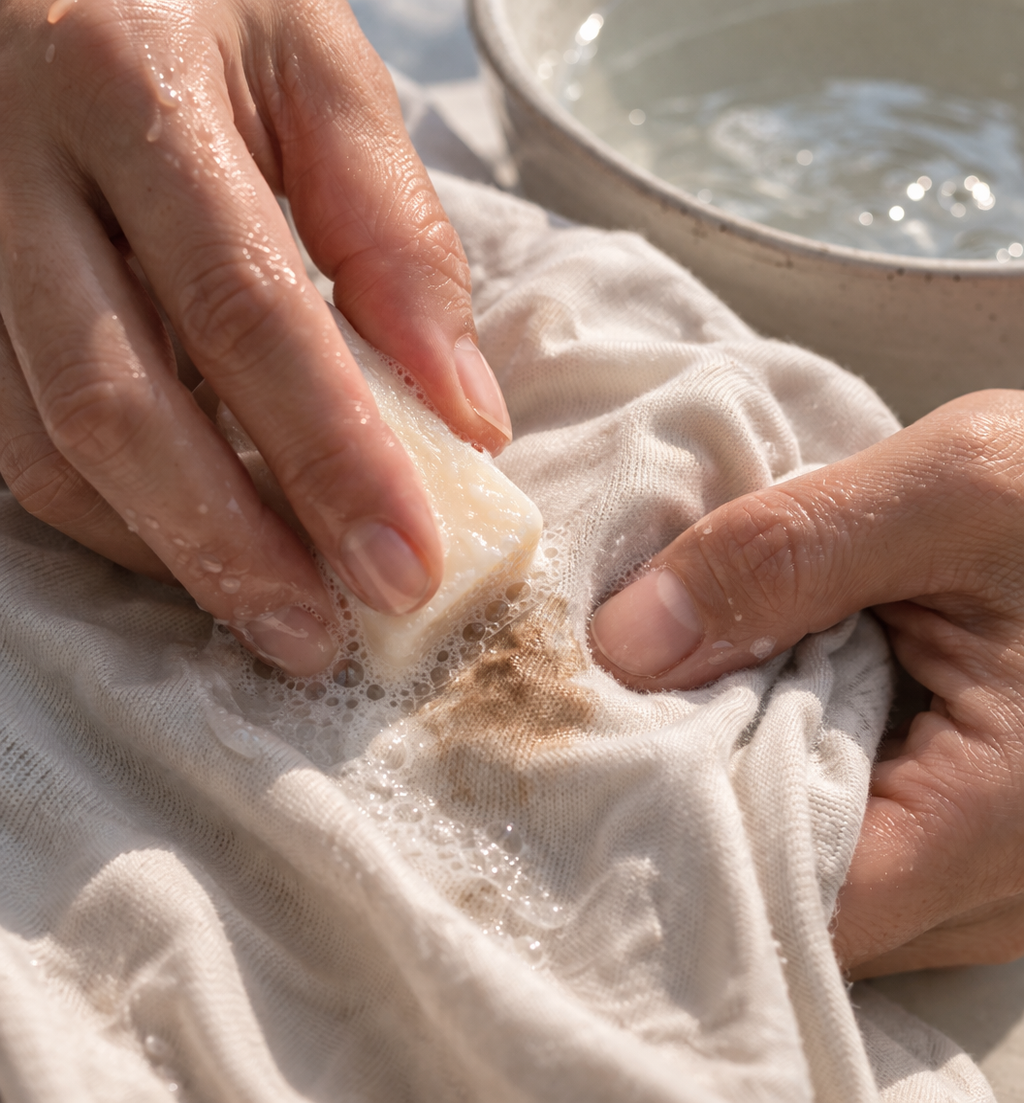
For extra stains: You can rub a stain with a little soap and warm water first, then wash.
For whites: Add 1 tablespoon oxygen bleach (sodium percarbonate). Don’t use oxygen bleach on delicate dark items.
For sensitive skin: Do an extra rinse if you’re switching because of itchiness.
This DIY liquid detergent is not the best choice for washing wool or silk.
How to choose the best non-toxic laundry detergent
If DIY is not your thing (no shame), here’s how to shop smarter.
1) Start with fragrance-free
If your #1 goal is skin comfort, fragrance-free is a great choice.
A fragrance-free, safe laundry detergent is often easier on:
Babies
People with allergies
People with eczema
Anyone who hates strong smells
2) Look for trusted labels
Some people like third-party certifications because they help confirm safety claims.
Common ones include:
EPA Safer Choice
EWG Verified (for some products)
3) Pick the format that fits your home
Different types can work better for different people.
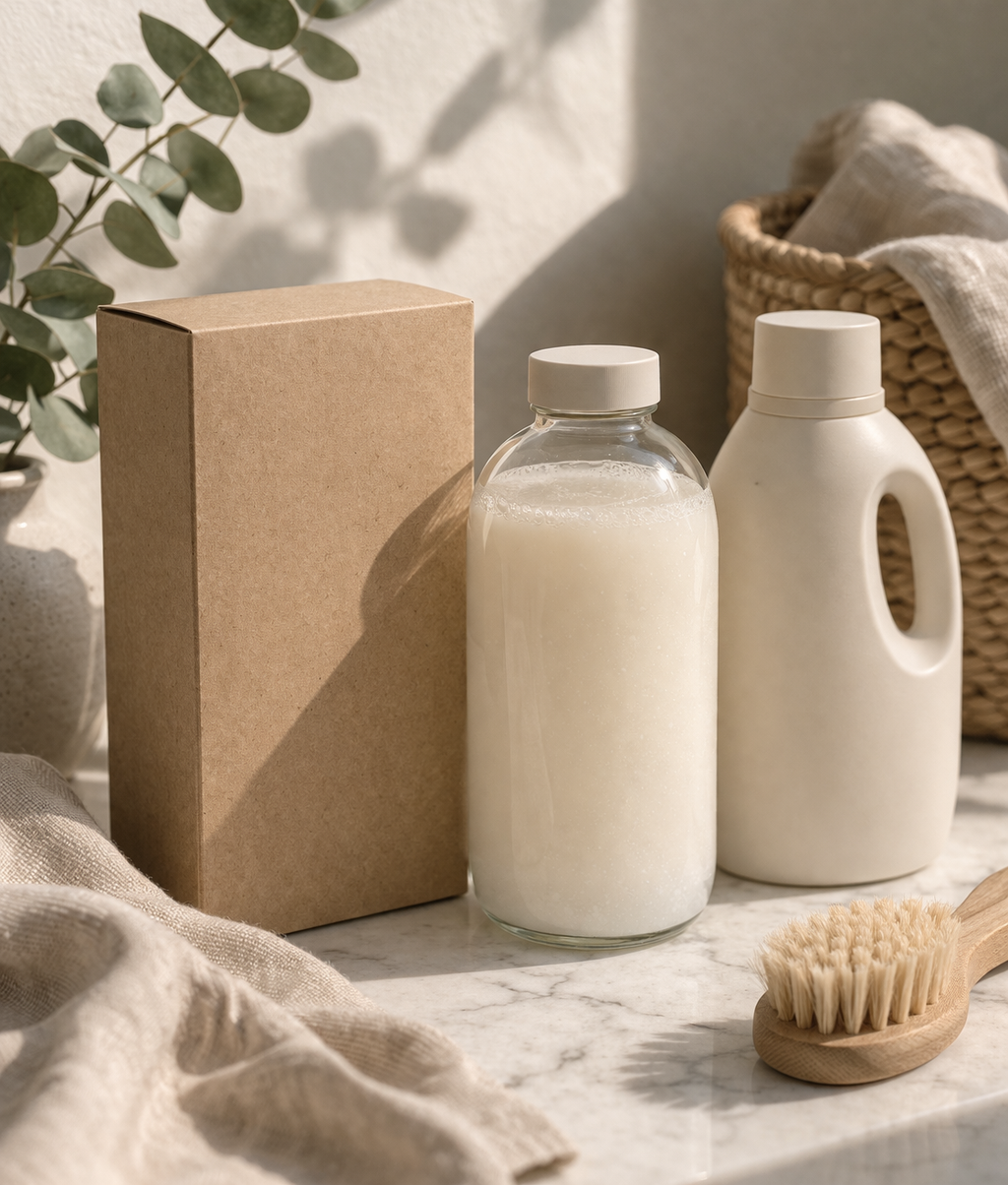
Powder: often comes in cardboard and can be low-waste
Liquid: easy in cold water and quick washes
Sheets/tablets: very compact and often plastic-free
Pods: easy, but keep away from kids and pets
If you want a more eco-friendly laundry detergent, powders and sheets can be great for less plastic.
4) Make sure it works with your washer
If you have an HE machine, choose an HE detergent.
Too many suds can cause problems.
5) Think about your biggest problem
Pick your detergent based on what you actually need.
If skin is the issue: choose fragrance-free
If stains are the issue: look for enzymes and oxygen bleach
If waste is the issue: choose cardboard or refills
That’s how you find the best natural laundry detergent for your life.
Tips for a Healthier and More Eco-Friendly Laundry Routine
Detergent matters. But your habits matter too.
Use less detergent
Most people use too much.
Too much detergent can:
Leave residue
Trap odors
Make skin itch
Start with the smallest amount that gets clothes clean.
Wash in cold water when you can
Cold water saves energy and is gentler on fabrics.
Many eco-friendly laundry detergent options work well in cold water.
Skip fabric softener
Fabric softener can coat fabric.
That coating can make towels less absorbent.
Try instead:
White vinegar in the rinse
Wool dryer balls (instead of dryer sheets)
Add an extra rinse for sensitive skin
If you are switching to non-toxic laundry detergent because of skin issues, an extra rinse is a simple helper.
Clean your washing machine
A dirty washer can make clean clothes smell bad.
Easy habits:
Leave the washer door open after a load
Wipe the rubber seal (front loaders)
Run a cleaning cycle once a month
Choose low-waste packaging
If you want a chemical-free laundry detergent and a greener home, packaging matters.
Look for:
Cardboard boxes
Concentrated refills
Smaller, lighter products that ship with less waste
Keep It Simple and Find What Works
Switching to non-toxic laundry detergent is not about being perfect.
It’s about making a smart, simple choice for your home.
If you want a quick plan:
Start with a fragrance-free, safe laundry detergent.
If you love DIY, try the recipe above.
If stains are tough, choose a natural laundry detergent with enzymes.
If you care about the planet, look for an eco-friendly laundry detergent with low-waste packaging.

Clean clothes should feel good. They should not make you itchy. They should not smell like a perfume bomb.
And once you find a detergent that works for your skin and your life, laundry gets a lot less stressful.